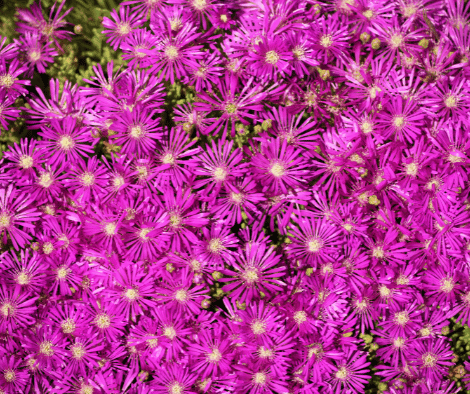
Ice plant, botanical name as Delosperma, is a captivating succulent known for its vibrant flowers and drought-tolerant nature.The name Delosperma cooperi has its roots in Greek. “Delosperma” originates from “delos,” meaning visible, and “sperma,” meaning seed. “Cooperi” pays homage to William Cooper, an esteemed 19th-century English botanist renowned for his substantial contributions to botanical understanding.
In this detailed guide, we delve into what makes ice plant unique, including optimal growing conditions, cultivation methods, essential care tips, and the benefits of adding these resilient plants to your garden.
What is Ice Plant?
Ice plant is a genus of succulent plants native to southern Africa. These low-growing perennials are prized for their fleshy, cylindrical leaves and prolific, daisy-like flowers that bloom in an array of dazzling colors, including shades of pink, purple, orange, and yellow. Ice plants are well-suited to hot, dry climates and thrive in well-drained soil. Ice plant flower season is late spring to early fall and sowing time is spring.
- Botanical Name: Delosperma spp., Lampranthus spp.
- Common Name: Ice Plant
- Family: Aizoaceae
- Type: Herbaceous Perennial
- Hardiness Zones: USDA zones 6 – 10
- Sunlight: Full Sun
- Soil: Sandy, Well-Drained
- pH: Neutral
- Height: 3 – 6 inches
- Blooming Season: Spring, Summer, Fall
- Flower Colors: Pink, Red, Purple, Yellow, Orange
- Native to: Africa
Why it is called Ice Plants ?
Ice Plant succulents, notably the Delosperma species, possess unique leaves with specialized cells containing water-storage tissues reminiscent of miniature, sparkling ice crystals. When light interacts with these cells, it produces a shimmering effect on the leaves, creating the illusion of the plant being enveloped in ice.
Ice Plant Sowing Time
Ice plant growing season is in the spring, once the threat of frost has passed and the soil has warmed up. In colder climates, it can also be planted in the early summer to allow time for establishment before winter. Planting during the cooler months helps reduce transplant shock and encourages healthy root development.
Ice Plant Flower Season
Ice plant typically blooms from late spring to early fall, producing an abundance of colorful flowers that attract pollinators like bees and butterflies. The peak blooming period varies depending on the specific variety and local climate conditions. Providing optimal growing conditions, including ample sunlight and well-drained soil, encourages profuse blooming throughout the growing season.
Ways to Grow Ice Plant
Ice plant can be grown from seeds, cuttings, or nursery-bought plants. Direct sowing seeds or planting nursery-bought starts in well-drained soil with good sunlight exposure is ideal for successful growth. Ice plants are well-suited to rock gardens, slopes, containers, and as ground cover in dry, sunny areas.
Ice plants can be propagated easily from stem cuttings or division. Simply take cuttings from healthy stems, allow them to callus for a few days, then plant them in well-draining soil. Alternatively, divide mature plants by gently separating the roots and replanting the divisions.
Care Tips For Ice Plant
For optimal care of your ice plant, ensure it’s planted in well-draining soil, such as a sandy or gritty mix, to prevent water-logging and root rot. Re potting the ice plant as needed when it outgrows its current container, selecting a slightly larger pot with drainage holes. Water sparingly, allowing the soil to dry out between waterings to prevent over-watering. This succulent thrives in full sun to partial shade, so provide adequate sunlight for healthy growth and flowering.
- Soil and Fertilizer: Ice plants thrive in sandy or gritty, well-drained soil with low to moderate fertility. Avoid heavy or water-retentive soils, as they can lead to root rot. Fertilize sparingly with a balanced fertilizer formulated for succulents during the growing season.
- Watering: Water ice plants sparingly, allowing the soil to dry out between waterings. Over-watering can cause root rot, so it’s essential to err on the side of under-watering, especially in humid climates.
- Sunlight: Ice plants require full sun to thrive and produce abundant blooms. Plant them in a location with at least 6-8 hours of direct sunlight per day for optimal growth and flowering.
- Pruning: Prune ice plants lightly to remove dead or faded flowers and encourage continuous blooming. Trim back any leggy or overgrown stems to maintain a compact, tidy appearance.
- Pest and Disease Control: Ice plants are relatively pest and disease-resistant but may occasionally be susceptible to aphids, mealybugs, or fungal diseases in humid conditions. Monitor plants regularly and treat any infestations promptly with insecticidal soap or neem oil.
Ice Plant Re-Potting Method
- When your Ice Plant starts to outgrow its container, it’s time for a change of scenery. Signs like roots peeking out of drainage holes or the plant seeming a bit cramped are indicators it needs a new home. Re-potting ensures your Ice Plant has enough space to continue flourishing.
- To start, gently lift the Ice Plant out of its current pot, tapping the sides to loosen soil and roots. If the roots are tightly packed, loosen them with your fingers or a small tool. Then, pick a slightly larger pot with drainage holes to avoid water-logging.
- Prepare fresh potting soil, using a succulent or cactus-specific blend if available. Fill the new pot with soil, making sure the base of the stem sits level with the pot’s rim to prevent water accumulation.
- Carefully position the Ice Plant in the new pot, spreading out its roots evenly. Fill in any gaps with soil, lightly pressing it down to remove air pockets. Avoid compacting the soil too much, as it can hinder drainage.
- After re-potting, give the Ice Plant a good soak, allowing water to flow through the soil and drain out. This helps the plant settle into its new home and encourages root establishment in the fresh soil.
How to Extract Seeds from Ice Plant
- To extract seeds from ice plant, allow the flowers to fade and dry on the plant.
- Once the seed pods have formed, carefully collect them and allow them to dry further indoors.
- Once dry, gently crush the seed pods to release the seeds.
- Store the seeds in a cool, dry place until ready to plant.
Why Should You Grow Ice Plant?
- Drought Tolerance: Ice plants are highly drought-tolerant once established, making them ideal for water-wise landscapes and xeriscaping projects.
- Low Maintenance: Ice plants require minimal maintenance once established, making them perfect for busy gardeners or those with limited time for upkeep.
- Colorful Blooms: Ice plants produce an abundance of colorful flowers that brighten up garden beds, borders, and containers throughout the growing season.
- Attracts Pollinators: The vibrant flowers of ice plants attract pollinators like bees and butterflies, contributing to garden biodiversity and supporting native wildlife.
In conclusion, ice plant is a versatile and resilient succulent that adds beauty and color to any garden landscape. By providing optimal growing conditions and following proper care guidelines, you can enjoy the vibrant blooms and low-maintenance beauty of ice plant in your garden for years to come.